
The AIgorythm project

Playwright and actor
Novelist
Italian-Peruvian naturalist and geographer
Singer and percussionist
Last Inca emperor

Politician, former prime Minister
Journalist and TV host

Poet
Inca warrior
Biophysicist
Doctor and researcher

Singer and songwriter
Film director, Berlin Golden Bear winner

Football player

Writer and journalist
Chess player
Industrialist
Former general
Specialist in public health
Mathematician and engineer
Neurologist and anthropologist
Painter
Football player
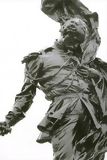
National hero, military leader

Fashion designer

Singer-songwriter
Marathon runner
Indigenous Peruvian chronicler
Writer and television host
Folk musician
Poet and guerrilla
Chef, known for fusion cuisine
Poet and artist
Peruvian tennis player
Football coach
Leader of the indigenous rebellion
Military hero

Latin singer
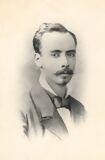
War of the Pacific hero
The youngest mother in history
Politician

Creole music singer
Tennis player

Musician
Politician and founder of the Christian Democratic Party
Founder of Sodalitium Christianae Vitae
Archaeologist and anthropologist
Television host

Actress and singer

Contemporary sculptor
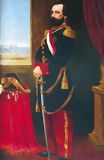
Military figure and historical figure

Fashion photographer
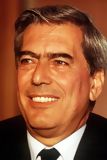
Writer, Nobel Prize in Literature, Politician
Revolutionary leader
Leader of the indigenous rebellion

Musician from Gaia band
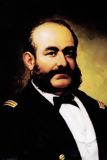
War hero
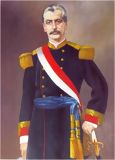
Military leader and politician
Chef, known for Nikkei cuisine
Television personality
Writer

Football player
Inventor and aerospace pioneer
Soldier and inventor
TV presenter and actress
Actor
Writer and historian
Archaeologist, founder of Caral site
Monk and Saint
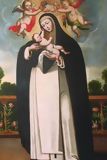
Saint, patron of Latin America
Oncologist

Singer, Latin Grammy winner

Singer
Actress
Painter
Inca leader
Archbishop, saint

Former head of secret services
Popular singer

Fashion designer
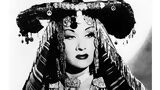
Exotic music singer


Miguel Grau Seminario, born on July 27, 1834, in Paita, Peru, is one of the country's greatest national heroes. As a naval officer, he is best known for his crucial role during the War of the Pacific (1879-1884), where he fought with courage and dignity as the commander of the ironclad ship *Huáscar*. His bravery, humanity towards his enemies, and devotion to his country made him an iconic figure in Peruvian history. Known as the "Knight of the Seas," his legacy is honored every year in Peru, and he remains a symbol of honor, sacrifice, and patriotism.
Miguel Grau was born into a humble family, the son of Juan Manuel Grau, a Catalan merchant, and María Luisa Seminario, a woman from Piura. From a young age, he showed great interest in the sea and navigation. At the age of 9, he embarked on merchant ships where he learned the basics of seafaring. At 19, he joined the Peruvian Navy, beginning a brilliant military career.
Grau quickly rose through the ranks of the Navy, thanks to his intelligence, sense of duty, and exceptional naval skills. He studied at the Peruvian Naval School, where he honed his knowledge of naval strategy and tactics. His training made him one of the most respected officers in the Navy, earning the trust of his superiors and the admiration of his colleagues.
The War of the Pacific, which broke out in 1879 between Peru, Bolivia, and Chile, marked a turning point in Miguel Grau’s career. As the commander of the monitor *Huáscar*, an ironclad warship of the Peruvian Navy, he played a decisive role in the early stages of the conflict. Despite being technologically outmatched by Chilean ships, the *Huáscar* became a symbol of resistance under Grau’s command.
Grau distinguished himself in several naval battles, particularly the Battle of Iquique in May 1879, where he sank the Chilean corvette *Esmeralda*. However, it was his conduct after the battle that truly cemented his reputation as a gentleman. After destroying the *Esmeralda*, he ordered the rescue of Chilean survivors and sent a letter to the families of the fallen Chilean officers, expressing his condolences and respect for their bravery. This act of compassion earned him admiration not only in Peru but also in Chile.
On October 8, 1879, during the Battle of Angamos, Miguel Grau was killed in action. Despite the valor of his crew, the *Huáscar* was outmatched by the Chilean naval forces. After several hours of fierce combat, the ship was severely damaged, and Grau was killed when an enemy shell struck the command tower. His death was a great loss for Peru, but it solidified his status as a national hero.
The Battle of Angamos is commemorated every year in Peru as "Navy Day" in honor of the sacrifice of Miguel Grau and his men. This day is a time to reflect on the legacy of courage and dedication he left to his nation.
Beyond his military achievements, Miguel Grau is remembered as a man of great moral integrity. His contemporaries described him as a humble, respectful, and just leader who inspired loyalty among his men. He was also a family man, deeply devoted to his wife and children. His letters to his family, written during the war, reveal a sensitive man, aware of the sacrifices he and his loved ones were making for their country.
Grau was also a strong advocate for national unity and believed in social justice. He believed that military officers should serve their country with honor and respect, not as instruments of personal power. His principles of selfless service and sacrifice for the greater good made him a morally respected figure, not only in Peru but also internationally.
After his death, Miguel Grau quickly became a national icon in Peru. Monuments were erected in his honor throughout the country, and his name is forever etched in Peruvian history as the "Knight of the Seas." The Peruvian Navy continues to revere him as one of its greatest heroes, and the *Huáscar*, now preserved as a floating museum in Chile, stands as a testament to his historical importance.
His example continues to inspire younger generations of Peruvians, not only in the military but also in civilian life. His devotion to his country, respect for his enemies, and sense of honor are universally admired qualities. He represents an ideal of public service and sacrifice that many Peruvians strive to emulate.
October 8, the day of his death, is a key date on the Peruvian calendar. Every year, official ceremonies are held in his memory, particularly in Lima, where government representatives, Navy officials, and ordinary citizens gather to honor their national hero. Schools, warships, and public squares bear his name, a testament to the indelible legacy he left on the nation.
Miguel Grau Seminario embodies heroism, compassion, and honor. His life and sacrifice have left a lasting legacy in Peru, where he remains a venerated figure. As the "Knight of the Seas," he represents not only a great warrior but also a model of humanity and respect for his enemies—a rare example in the history of conflicts. His name will forever be associated with the highest values of the Peruvian nation.